

Location of Hand Washing Stations in a Food Factory
In food factories, hands are the primary route of microbial transmission. Properly configured handwashing facilities are fundamental to ensuring food safety and a direct reflection of a company's
quality management. Based on international regulations such as GB 14881 and BRCGS, and combined with hygiene planning, let's talk about the locations and compliance reasons for these
hans washing facilities.
I. Core Locations
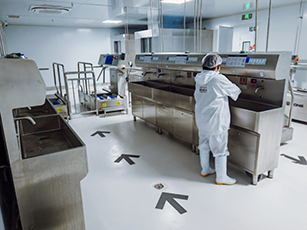
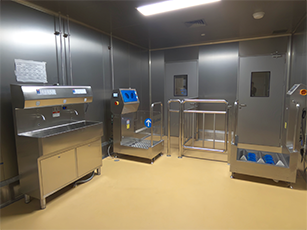
1. Production Area Entrance
Before entering the workshop, especially at the entrance to clean work areas, facilities with complete handwashing, hand drying, and disinfection functions must be provided. This is the first line of
defense against external contamination. BRC Standard 4.8.4 explicitly requires handwashing stations at the entrance to the production area.
Toilets are high-risk areas for the transmission of enteropathogenic bacteria, and handwashing facilities must be provided at the exit. If this is the only handwashing point for returning to the
workshop, its configuration standards should be consistent with the production entrance, including non-manual faucets, hand soap, hand dryers, and disinfectants.
In areas with high cleanliness requirements, handwashing stations should be provided near individual lockers in changing rooms or before putting on work clothes to avoid contaminating already
cleaned work clothes. The workflow planning should ensure a continuous "handwashing-changing-entry" hygiene process at changing room transition points.
.jpg)
 拷贝.jpg)
4. High-Risk Area Entrances
For high-risk areas such as cold dish preparation areas and inner packaging areas, independent and higher-standard handwashing and disinfection facilities must be provided at the entrance as a
mandatory hygiene procedure before entry. GB 14881-2025 emphasizes that handwashing and disinfection facilities must be provided at the entrance of clean work areas, and the faucets must be
non-manual.
5. Internal Workshop Risk Points
Handwashing stations should be located nearby at process transition points prone to cross-contamination (such as from raw material handling to finished product contact), waste disposal points,
and equipment maintenance areas. Ideally, the distance between them should not exceed 15 meters, ensuring that employees can reach the nearest handwashing station within 10 seconds.
II. Reasons for Configuration and Compliance Basis
1. Preventing Cross-Contamination
Hands are the primary carriers of microorganisms, allergens, and physical contaminants. Setting up handwashing stations at every personnel flow and process transition point can break the chain
of contamination transmission. Professional planning, through flow analysis, places handwashing facilities at "contaminated area return nodes" and "process transition nodes," ensuring employees
can clean themselves immediately after contact with contaminants.
2. Meeting International Regulatory Requirements
GB 14881-2025: Clearly requires handwashing, hand drying, and disinfection facilities at the entrance of clean work areas. The faucets must be non-manual, and the number must be at least one
per 25 people.
BRCGS Standard: Section 4.8.4 requires handwashing stations to be equipped with non-contact faucets, liquid soap dispensers, hand dryers, and clear signage, and mandates their installation in
changing rooms, high-risk areas, and restrooms.
FDA/Codex: Similarly requires handwashing facilities in food preparation areas, restrooms, and work areas.
3. Improving Employee Compliance
Conveniently located handwashing facilities can significantly increase employee handwashing frequency. Studies show that when handwashing stations are located beyond a certain distance from
the work area, the probability of employees skipping the process increases significantly. Professional planning places handwashing stations in locations frequented by employees and enhances
the user experience through sensor-based devices and voice guidance.
4. Supporting HACCP Risk Control
Risk-based handwashing station layout concentrates resources on the most critical contamination points. By linking facility configuration with environmental microbial monitoring (e.g., total
bacterial count on hands ≤30 CFU/cm²), companies can verify handwashing effectiveness, achieving a shift from "passive compliance" to "proactive management."
Scientifically positioning handwashing stations is a core element of hygiene design in food factories. Companies should combine international regulations with professional planning capabilities to
systematically configure facilities at entrances, restrooms, changing rooms, high-risk areas, and internal risk points to safeguard food safety from the source.


