

Why Does the European Meat Processing Plants Install Boot Washer?
In the modern food industry, work boots are not just personal protective equipment for employees, but also a crucial part of the hygiene management system in
meat processing plants. Especially in Europe, meat processing companies typically need to establish strict personnel hygiene, area segregation, and cross-
contamination control measures. Therefore, boot washers have gradually become standard equipment at personnel entrances and hygiene passageways in many
meat processing plants.
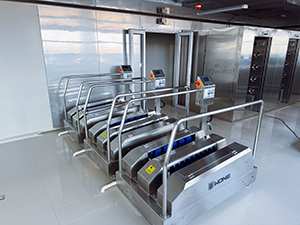
So, why do European meat processing plants place such importance on boot cleaning? What problems do boot washers actually solve?
1. Work boots are a significant carrier of contamination in meat processing plants
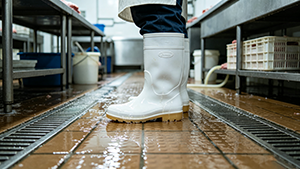
Meat processing environments typically contain large amounts of moisture, blood, fat, meat scraps, and organic residues. As employees walk between different
areas, the soles and uppers of their shoes easily pick up these contaminants.
.png)
.png)
.png)
For example, if an employee moves from the raw material handling area to the processing area and then to the packaging area, without effective shoe cleaning,
contaminants can travel with the soles of their shoes.
This is what food factories commonly refer to as walking pollution.
Therefore, work boot hygiene should not be understood merely as "washing boots clean," but rather as a crucial measure to control contamination from personnel
movement.
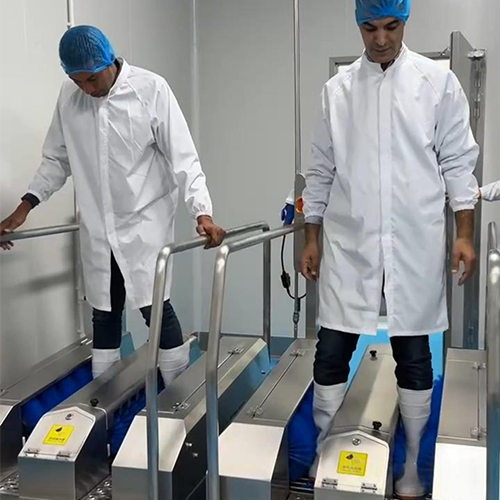
For a meat processing plant, controlling the movement paths of personnel, equipment, raw materials, and contaminants is a vital component in reducing the risk
of cross-contamination.
2. European Food Hygiene Regulations Emphasize Preventing Food Contamination
European food hygiene regulations do not simply require "clean factories," but emphasize that food operators must establish hygiene measures capable of
controlling food safety risks.
EU Regulation (EC) No 852/2004 requires food operators to ensure that the production, processing, and distribution stages of food within their control meet the
corresponding hygiene requirements, and requires good food hygiene practices in food handling areas to prevent contamination. The regulation also requires
personnel in food handling areas to maintain a high level of personal hygiene and wear appropriate, clean protective clothing.
For animal-derived foods such as meat, the EU has also established more specific hygiene requirements. The European Commission has clearly stated that
animal-derived foods are subject to stricter hygiene regulations, including slaughterhouses and meat processing facilities.
It's important to note that EU regulations do not simply mandate that "every meat processing plant must install a specific type of boot washer." Businesses need
to take appropriate measures based on their own risk assessments and production processes. Therefore, the value of a boot washer lies in helping factories
implement "personnel hygiene" and "prevention of cross-contamination" requirements in practice.
3. Why can't a regular pool replace a boot washer?
Some factories may believe that having employees step through a disinfection pool or rinsing the soles of their boots with water is sufficient.
In reality, this method often fails to achieve consistent work boot hygiene.
Meat processing plant boots typically have complex sole tread patterns. Blood, fat, and meat scraps easily become embedded in the sole grooves, making it difficult to remove them thoroughly with just water.
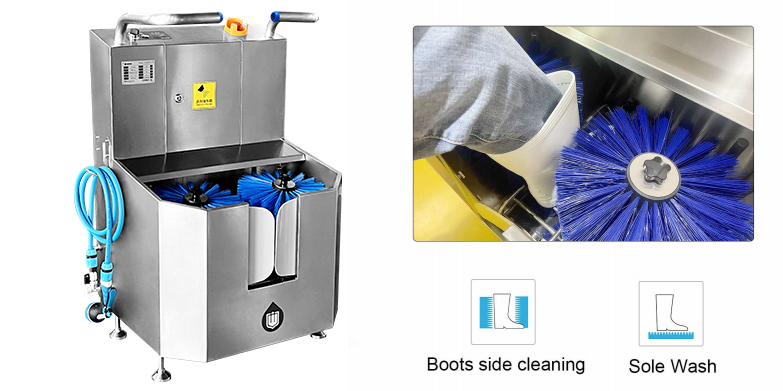
A professional boot washer can mechanically clean the soles and uppers using rotating brushes, side brushes, and water and detergent.
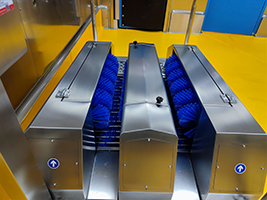
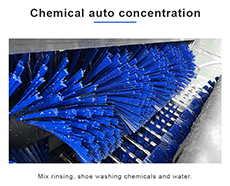
Mechanical Brushing + Water + Cleaning Chemical = More Effective Boot Cleaning
Mechanical brushing helps remove organic contaminants adhering to the sole treads and boot uppers, creating better conditions for subsequent disinfection.
4. Boot Washers are also an important component of personnel hygiene systems
In European meat processing plants, personnel typically follow prescribed hygiene procedures when entering different production areas.
A typical personnel hygiene procedure might include:
- Changing Room → Boot Cleaning → Hand Washing → Hand Disinfection → Production Area
In high-hygiene areas, factories may also add control measures such as shoe disinfection, personnel changing, and access control based on risk assessments.
Therefore, the boot washer is not an isolated piece of equipment but can be integrated into the entire personnel hygiene system.
The greatest value of this is ensuring that employees complete the prescribed hygiene steps before entering the production area, rather than relying on employees
"voluntarily washing their boots."
5. Automated Boot Washing Machines Enable Standardized Hygiene Management
Traditional manual cleaning has a significant problem: cleaning effectiveness depends on employee operation.
Different employees may use different times, intensities, and cleaning methods, resulting in inconsistent hygiene outcomes.
Modern boot washer systems typically use sensors for automatic activation. When an employee enters the machine, the scrubbing system automatically runs,
cleaning the soles and sides of the boots.
--------------------------------------------------------------------------------------------------------------------------------------------------------------------------------------------
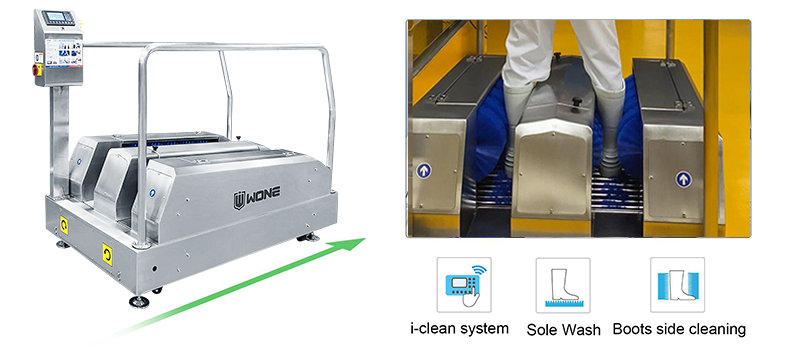
For large meat processing plants, this automation offers three advantages:
- Consistent Cleaning: Reduces human error;
- Better Hygiene Control: Makes boot cleaning a fixed hygiene process;
- Improved Workflow: Eliminates the need for manual scrubbing, increasing personnel flow efficiency.
For businesses undergoing customer audits, third-party audits, or food safety system audits, standardized hygiene processes are also easier to manage and verify.
6. Why are boot washer machines particularly suitable for the meat processing industry?
The characteristics of the meat processing industry mean that work boot contamination is typically more pronounced than in general food processing plants.
During production, the following may occur:
- Blood and meat residues
- Fat and grease
- Organic contamination
- Mud and floor debris
- Water and wastewater
- Microbial contamination risks
These contaminants easily adhere to the soles and uppers of work boots.
Therefore, in meat processing plants, boot washer machines are often used not only for cleaning soles but also, depending on the equipment design, for scrubbing
the uppers.
This is why more and more meat processing plants are setting up boot cleaning facilities in changing rooms, hygiene entrances, or between different hygiene
areas.
7. Upgrading from "Boot Washing" to Complete Work Boot Hygiene Management
Truly effective work boot hygiene is not simply about installing a boot washer machine.
A complete work boot hygiene management system typically includes:
- Before Shift: Work boots are cleaned and disinfected before employees enter the production area.
- During Production: Personnel movement between production areas is controlled according to hygiene levels, avoiding direct entry from low-hygiene areas to high-hygiene areas.
- After Shift: Work boots are thoroughly cleaned after each shift and then stored, dried, and disinfected as necessary according to regulations.
It is particularly important that the internal hygiene of work boots is equally important. If work boots are damp for extended periods, it not only affects wearing
comfort but also hinders overall work boot hygiene management. Therefore, some modern food factories further equip themselves with work boot drying and
disinfection equipment.
A clean food plant starts with clean people—and clean people need clean work boots.


