

Different types of dirt require different cleaning chemical
In food processing and restaurant kitchens, various types of dirt exist. Choosing the wrong cleaning agent can not only result in poor cleaning but also damage equipment surfaces
or create safety hazards. For common protein, fat, sugar, and mixed sugar stains, scientifically selecting the right cleaning agent is key to efficient cleaning.
I. Protein Stains
Protein stains are commonly found in slaughterhouses, meat processing plants, dairy products, and soy product production lines, such as blood stains, egg yolks, and milk stains.
These stains easily denature and solidify, have strong adhesion, and are difficult to remove completely with ordinary cleaning agents.
Corresponding Cleaning Agent: Chlorine-based Alkaline Foam Cleaner
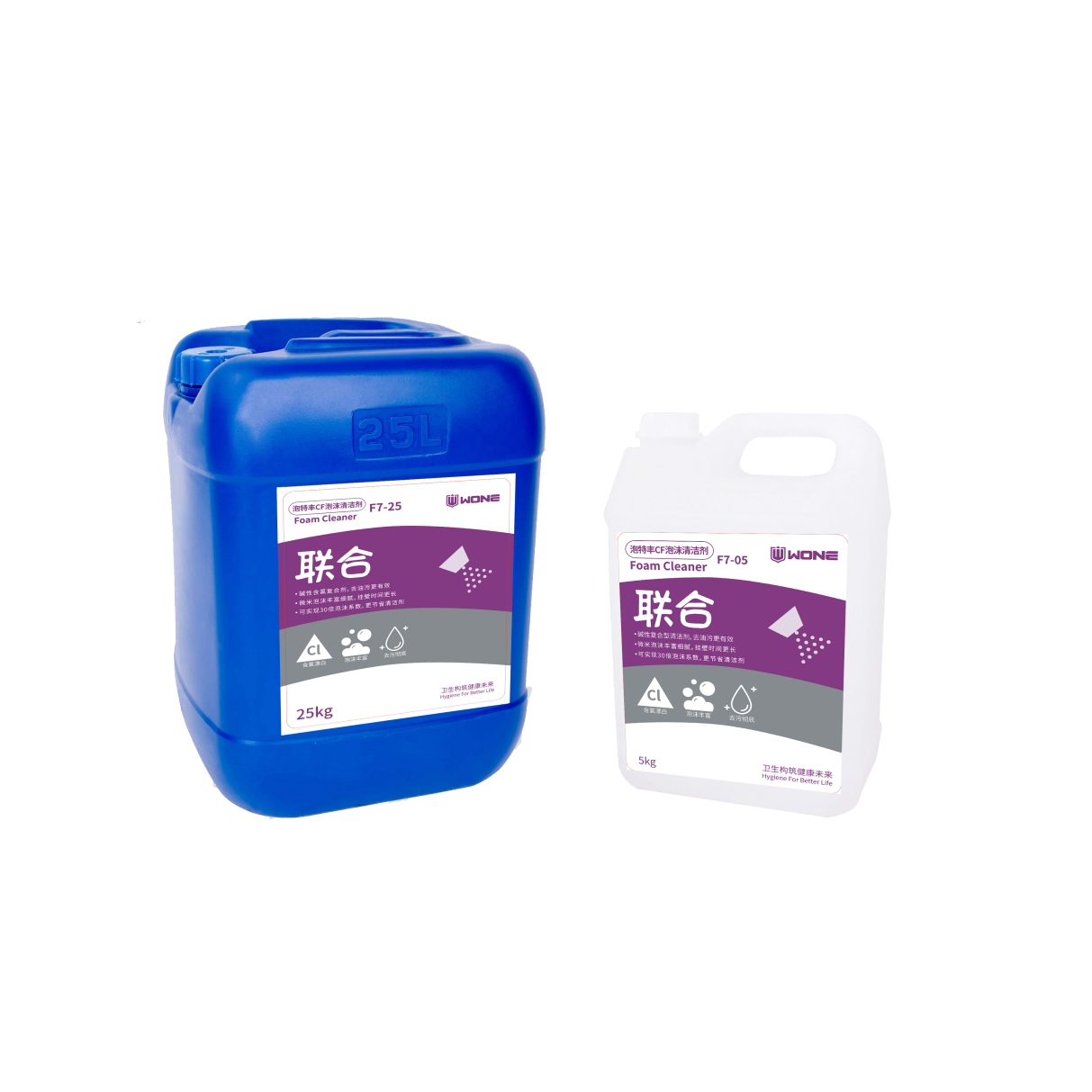 Taking "Paotefeng CF Foam Cleaner" as an example, its chlorine content quickly breaks down the organic structure of proteins, and its alkaline formula, combined with surfactants,
penetrates the interior of the stains for efficient removal. The foam form allows it to adhere to surfaces for a long time, making it particularly suitable for cleaning vertical surfaces
and complex structures such as slaughter lines and cooking equipment. When using, it is usually diluted 1-10%, covered, left for 5-30 minutes, and then rinsed.
II. Grease and Oil Stains
Grease and oil stains are widely found in frying workshops, woks, ovens, exhaust systems, and on the surfaces of various cooking equipment. They easily solidify at room
temperature, accumulating to form thick, heavy grease.
Corresponding Cleaner: Food-grade alkaline compound foam cleaner
"Paojifeng Foam Cleaner" is a typical example. Its alkaline compound formula breaks down grease into water-soluble particles through saponification. Its micron-sized foam is fine
and abundant, adheres to the walls for a long time, and fully penetrates the grease. Combined with a 30x high foaming coefficient, it saves on usage while increasing coverage.
Suitable for conveyor belts, cookware, heavily oiled floors, drains, etc.
III. Sugar Stains and Starch Residue
Sugar stains and starch residues often appear in baking, confectionery, beverage, and sauce production lines. They easily caramelize and carbonize when heated, forming hard,
dark-colored residues.
Corresponding Cleaner: Acidic Foam Cleaner
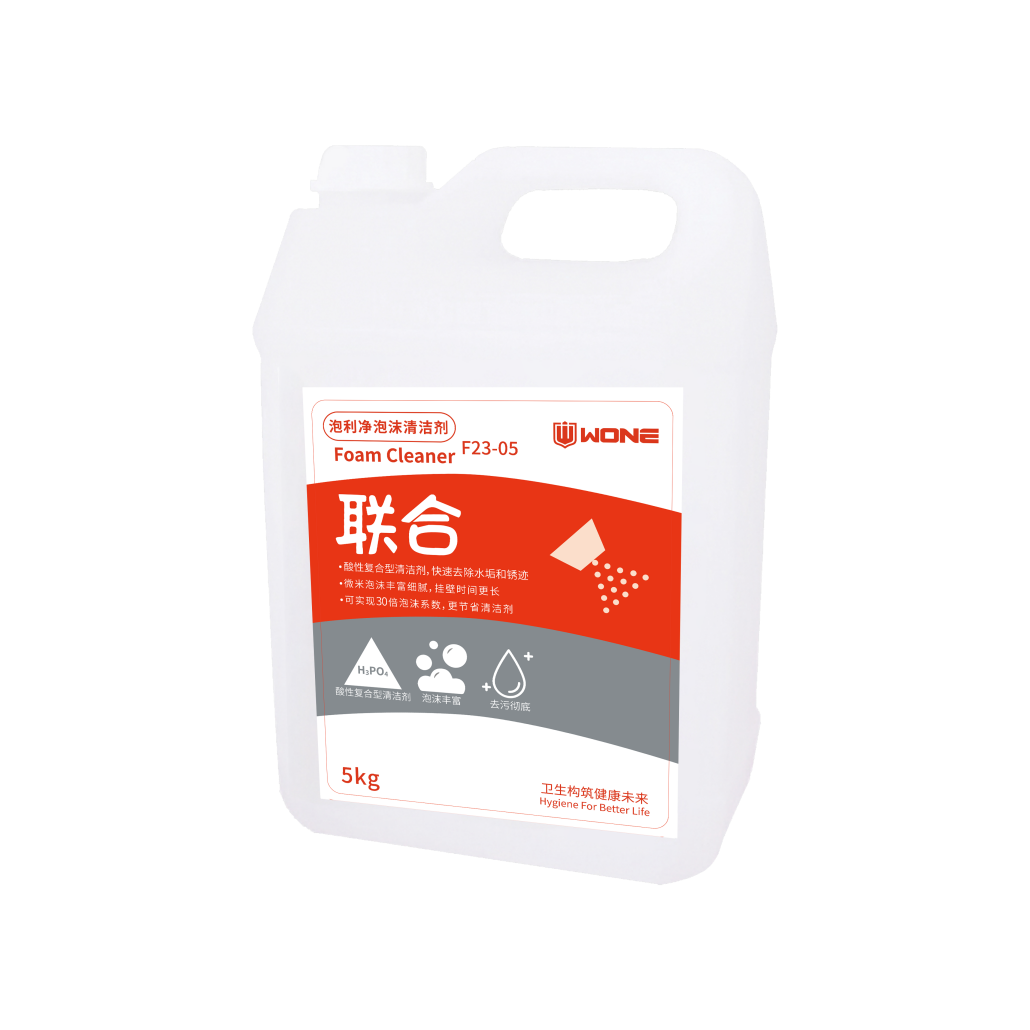
Acidic products such as "Paolijing Foam Cleaner" are specifically designed for this type of stain. Acidic components effectively dissolve sugar, starch, and mineral deposits (such as
scale and rust). Its foam has strong penetrating and emulsifying properties, and the compound formula also has scale-inhibiting and corrosion-inhibiting functions, protecting
equipment while removing sugar scale. Suitable for baking equipment, beverage filling lines, heat exchangers, etc.
IV. Mixed Sugar Scale (Combined Stains of Sugar and Protein or Fat)
In actual production, mixed stains are more common, such as sweet and sour sauce, baked goods containing cream, breaded and fried residue, etc., with complex compositions
and difficult to clean.
Cleaning Strategy: Step-by-step treatment or use a broad-spectrum compound cleaner
Step-by-step treatment: First, use an alkaline cleaner to remove the fat components, then use an acidic cleaner to treat the sugar and minerals.
Compound cleaner selection: For mild mixed stains, choose an alkaline foam cleaner with a broad staining spectrum (such as Foam Plus), which has good effects on both fats and
proteins. Combine this with mechanical friction (such as scrubbing) and appropriately increasing the water temperature (40-60℃) to enhance the dissolution of sugars.
Caution: Never mix acidic and chlorine-based cleaners, as this may produce harmful gases.
Summary: Cleaning is essentially a combination of chemical reactions and physical actions. For different types of dirt:
Protein stains → Chlorine-based alkaline agents
Fat and oil stains → Alkaline compound agents
Sugar stains and starch stains → Acidic cleaners
Mixed dirt → Step-by-step treatment or assistance with temperature and mechanical force
Correctly selecting cleaners and following recommended concentrations, contact times, and temperatures are essential to achieving safe, economical, and efficient cleaning,
ensuring the hygiene of the food production environment and equipment.


