

Considerations for Hygiene Equipment Selection in Food Processing Plants
When selecting equipment for food production plants, a common misconception is prioritizing price as the primary, or even sole, criterion. However, a cheap but poorly
designed piece of equipment can lead to high cleaning costs, frequent downtime, potential contamination risks, and even jeopardize the company's reputation and food
safety standards. Equipment selection is far more than simply "buying a machine"; it's essentially choosing a long-term, reliable system for ensuring food safety and
efficiency. Instead of focusing on "how much money was spent," we should focus on "what risks were avoided" and "what value was created."
The following are several core considerations to focus on when selecting equipment for food processing plants, rooted in internationally recognized food safety and hygiene
design standards.
Consideration 1: The Quality – Does the Equipment Meet the "Hygienic Design" Principle?
This is the starting point and bottom line for all considerations. Hygienic design means that from its inception, the equipment's structure, materials, and manufacturing
processes are designed for easy and thorough cleaning, disinfection, and prevention of contamination.
According to international standards (such as ISO 22002) and industry consensus (such as the Ten Hygienic Design Principles of the American Meat Institute (AMI) and the
Food Industry Association (GMA), the core requirements for hygienic design include:
1. Cleanability to the microbial level: Equipment surfaces must be smooth, non-absorbent, and free of dead corners. Wet processing areas should have self-draining
capabilities to prevent water accumulation and microbial growth. Structurally, sharp internal corners, recesses, and unsealed hollow tubes (such as frames) should be avoided
, as these are breeding grounds for dirt and microorganisms.
2. Material compatibility: Materials used in manufacturing equipment, especially for product contact surfaces, must be non-toxic, corrosion-resistant, and fully compatible with
the products you produce and the cleaning and disinfecting agents you use. For example, the national standard GB 14881 clearly stipulates that food contact surfaces should
use compliant materials that do not react with food and chemicals under normal conditions.
3. Ease of inspection, maintenance, and cleaning: Equipment should not have inaccessible "black holes." Components should be easily disassembled (without special tools
or requiring only simple training) for thorough cleaning and visual inspection. Bearings, drive units, etc., should be installed outside the product contact area as much as possible.
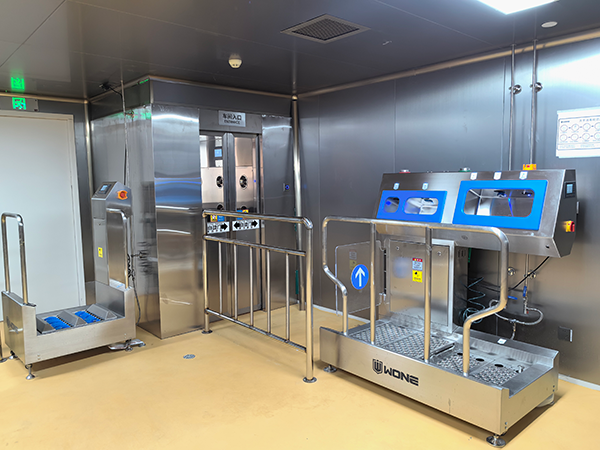
Taking personnel hygiene cleaning station as an example, a well-designed piece of equipment, such as the personnel hygiene station of WONE, integrates hand cleaning and
shoe disinfection. Its entire machine is made of 304 stainless steel in a single piece, with a smooth surface and curved design. The structure eliminates internal hollows and
hard-to-reach gaps, minimizing the risk of microbial hiding from a physical design perspective. This is a direct manifestation of hygiene design principles.
Focus Point 2: Long-Term Operation – Is the equipment “easy to use and maintain”?
The “ease of use” of equipment directly affects the efficiency of daily operations, employee willingness to perform, and long-term maintenance costs.
● Ease of Operation and Error Prevention: Complex operating procedures can easily lead to human error. Excellent equipment design should simplify operating steps. For
example, through color-coded management (different colored pipes and nozzles represent different functions) and integrated control valves, quick and accurate switching of
functions can be achieved, solidifying standard operating procedures (SOPs) into intuitive operation.
● Ease of Maintenance and Cost: Understand the frequency and complexity of routine equipment maintenance (such as replacing seals, lubrication, and filter cleaning).
Modular design and the use of standardized components significantly reduce the difficulty of later maintenance and spare parts inventory costs. This is repeatedly
emphasized in the "accessibility" principle of the GMA design checklist.
● Ease of Cleaning Validation: Does the equipment allow for easy validation of cleaning effectiveness? Does its design allow for rapid swab sampling of critical surfaces (such
as ATP testing)? This relates to the effectiveness of food safety monitoring.
Focus Point 3: Risk Control—Can the Equipment Strengthen "Chemical and Process Control"?
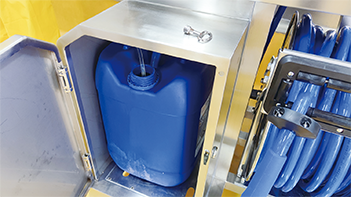
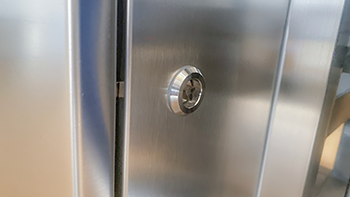
● Safe Control of Chemicals: Does the equipment design facilitate the safe management of chemicals (especially disinfectants)? For example, a closed, lockable reagent
tank physically prevents unauthorized access and misuse, reducing the risk of chemical contamination at the source.
● Precise Control of Concentration and Dosage: For cleaning and disinfection equipment, can it accurately and stably control the mixing ratio of chemicals and water? This
directly determines the consistency of cleaning and disinfection effects and the optimization of chemical costs. Automatic mixing systems relying on the Venturi principle or
precision proportioning pumps are far more reliable than manual estimation or simple mixing.
● Preventing Cross-Contamination: Does the equipment design and layout help distinguish between clean and dirty areas, and raw and cooked food areas? Is there proper
storage and cleaning space for mobile equipment after use? (The new version of GB 14881-2025 specifically emphasizes the proper storage of mobile equipment.)
Focus Point 4: Intelligent Future – Does the Equipment Possess “Data-Driven and Traceable” Capabilities?
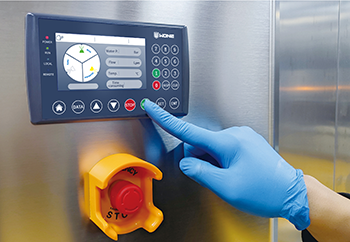
In the era of digital management, the “intelligence” of equipment determines the depth of management. When selecting equipment, its data capabilities should be considered
proactively.
● Key Parameter Recording: Can the equipment record and output key operational data? For example, an intelligent cleaning machine can track water, electricity, and
chemical consumption, equipment operating time, fault codes, etc. This data is the foundation for cost analysis, energy management, and preventative maintenance.
● Process Traceability: As a critical hygiene operation, can the cleaning and disinfection process be recorded and traced? For example, can the date, time, procedures, or
chemical concentrations used for each cleaning be recorded? This provides data support for hygiene verification and audit response.
Practical Application: For example, the foam cleaning machine from United Food Safety not only facilitates on-site operation but also provides real-time statistics on
consumption data and operating status, making every cleaning cost and every equipment operation clearly visible and traceable. This is precisely the embodiment of the
value of intelligent equipment.
Focus Point Five: System Adaptability – Does the equipment meet the "flexible layout and expansion needs"?
.png)
Food workshop layouts are diverse, and production needs may change, making equipment flexibility crucial.
● Deployment Flexibility: Depending on the workshop area and partitions, is a fixed central cleaning station required, or is mobile equipment that can move between areas
necessary? Mobile equipment typically comes with its own power source (such as a water pump or air compressor), offering greater flexibility.
● Coverage Capacity: Can the equipment's media (water, foam) delivery distance and coverage radius meet the needs of your largest workshop? Insufficiently short hoses
or limited coverage will lead to low equipment utilization.
● System Scalability: If production scales up or processes are upgraded in the future, can the currently selected equipment or system be easily expanded? Is it limited to
standalone use, or can it be smoothly upgraded to an integrated system with "centralized liquid supply and multi-point distribution"? This protects your initial investment.
In summary, the wisdom in selecting equipment for food processing plants lies in shifting the focus away from short-term "purchase price" and concentrating on the total
cost of ownership throughout the equipment's lifecycle and the core value it creates for food safety. A high-quality piece of equipment that meets hygiene standards, is easy
to use and maintain, facilitates intelligent management, and is flexibly adaptable may have a slightly higher initial investment, but it will continuously reward the company
over its long lifespan through lower failure rates, less cleaning time, more controllable safety risks, and better operational data.


