

Solution for the Walking Pollution
In meat processing plants, walking pollution is a common but often overlooked source of contamination. Workers move between changing rooms, production
areas, raw material zones, and other parts of the facility throughout the day. During these movements, contaminants can easily be carried on work boots and
transferred from one area to another.
Work boots are therefore one of the key points that meat processing plants need to control. However, effective boot hygiene should not focus only on the
sole. Both the outside and inside of the work boot require proper hygiene management.
Clean Both Boot Soles and Uppers
The soles of work boots can collect meat residues, grease, mud, and other contaminants during daily production. At the same time, the boot uppers and
sides can also become contaminated through contact with floors, equipment, and production materials.
Simply rinsing the sole is not enough. A complete boot cleaning process should remove contaminants from both the boot sole and boot upper.
WONE provides several boot washing machines designed for different production environments.
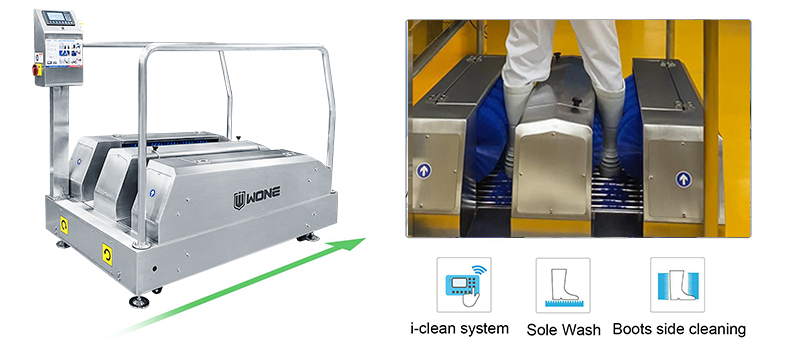
Heavy Dirt Boot Washer
PBW-61E is a heavy-duty, passage-type boot washing machine designed for areas with significant contamination. It uses both vertical brushes and
horizontal brushes to clean the boot uppers, sides, and soles as workers pass through the machine. This makes it suitable for meat processing plants
requiring intensive boot cleaning.
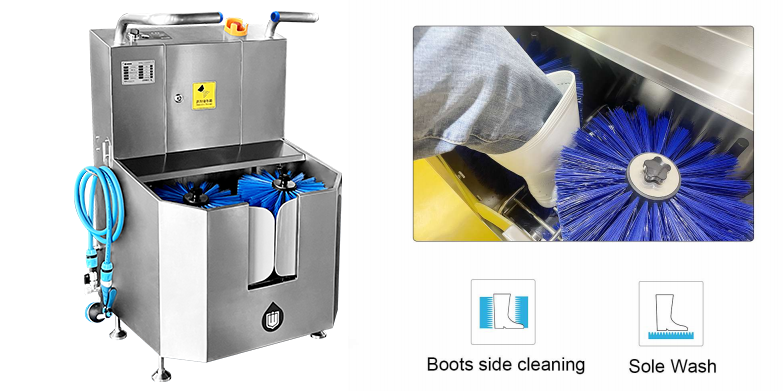
Compact Sole and Upper Boot Washer
PBW-31W also cleans both the boot upper and sole, but features a more compact and space-saving design compared with the PBW-61E. It is suitable for
facilities that need effective boot cleaning while working with limited floor space.
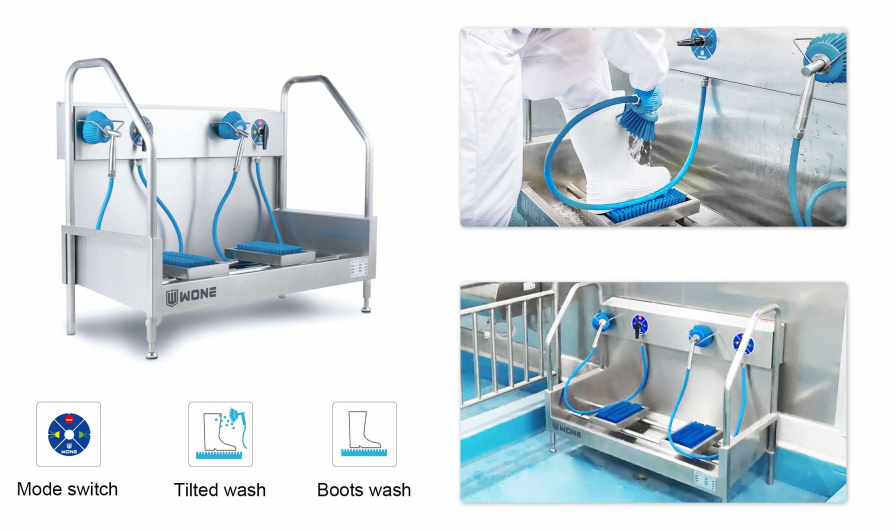
Manual Boot Washer
For smaller operations or areas requiring flexible cleaning, PBW-M2 is a manual boot washing machine.
Don't Forget the Inside of Work Boots
Cleaning the outside of work boots is only one part of boot hygiene. After a working shift, moisture and sweat can remain inside the boots. If boots are simply
stored while still wet, the internal environment can become unfavorable for hygiene and may lead to unpleasant odors and microbial growth.
This is why post-shift boot management is equally important.
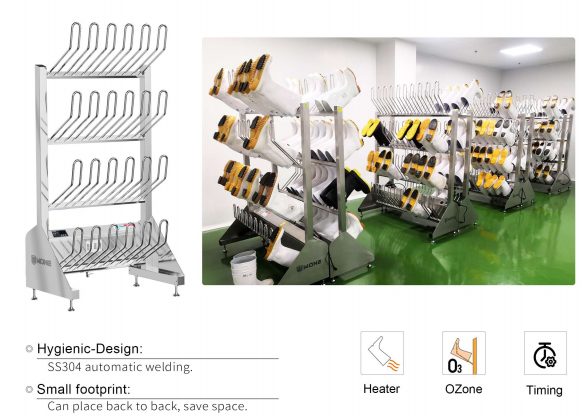
WONE's boot drying rack is more than a storage solution. It provides a dedicated place to organize work boots while also helping to dry and disinfect the
inside of the boots. By incorporating drying and disinfection into post-shift boot management, meat processing plants can establish a more complete boot
hygiene cycle—from cleaning the outside of the boot during production changes to drying and disinfecting the inside after the shift.
Build a Complete Boot Hygiene Cycle
For meat processing plants, controlling walking pollution requires more than simply cleaning the floor. Since work boots can act as a carrier for contaminants,
an effective solution should manage them throughout their entire use cycle:
- Clean the outside → Control cross-contamination → Dry and disinfect the inside → Store properly.
With WONE's boot washer and boot drying racks, meat processing plants can establish a more systematic approach to work boot hygiene and help
reduce contamination risks caused by personnel movement.
WONE — Complete boot hygiene solutions for safer food processing environments.


