

Air Disinfection Machine Application in Baking Plant
In modern baking plants, food safety depends not only on cleaned equipment and hygienic production processes, but also on effective air hygiene. Bread, cakes, pastries, cookies, and
other baked products may be exposed to the surrounding air during production, cooling, handling, packaging, and storage. Airborne microorganisms, dust, and cross-contamination can
therefore become important hygiene risks.
An air disinfection machine can provide continuous air treatment and help baking plants maintain a cleaner production environment. With UV and ozone disinfection technologies, rapid
air circulation, and flexible installation options, the machine can be applied to production workshops, storage rooms, and inner packaging areas.
Air Hygiene Risks in Baking Plants
1. Production Workshops
After baking, products usually need to be cooled before further processing or packaging. During cooling and handling, products may remain exposed to the surrounding air for a certain
period.
Airborne microorganisms can come from personnel movement, doors, ventilation systems, equipment surfaces, and other environmental sources. High personnel traffic and frequent
material movement can increase the possibility of airborne contamination.
For products that are ready to eat or have undergone a final baking process, controlling environmental hygiene during post-baking operations is particularly important.
2. Storage Rooms
Raw materials such as sugar, dried fruits, nuts, fillings, and packaging materials may be stored for extended periods. Finished or semi-finished products may also pass through
temporary storage areas.
Temperature fluctuations, humidity, dust, and insufficient air circulation can create additional environmental hygiene challenges. A storage room with poor air circulation may also have
localized areas where microorganisms are more difficult to control.
3. Inner Packaging Rooms
Inner packaging is one of the critical hygiene areas in a baking plant because products may be directly exposed to the surrounding environment before packaging is completely sealed.
Personnel, packaging materials, conveyor systems, and air movement can all influence the hygiene conditions of the packaging room. Continuous air treatment can therefore become
an important part of an overall environmental hygiene strategy.
WONE Air Disinfection Machine for Baking Plants
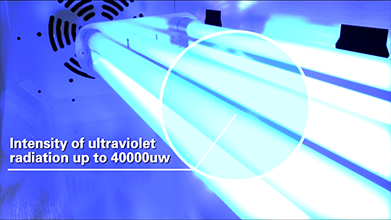
WONE's air disinfection machine is designed to provide continuous air treatment for food processing environments. Its core technology combines UV and ozone (O₃) disinfection.
.png)
The machine supports two main operating modes:
- During working hours: UV mode can operate continuously when personnel are present, supporting ongoing air disinfection.
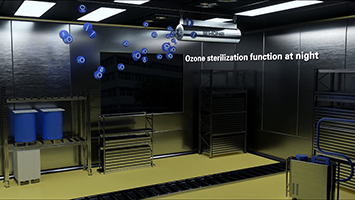
- After working hours: UV + ozone mode can be activated when the area is unoccupied, providing a more intensive disinfection cycle.
This allows one machine to support different hygiene requirements during occupied and unoccupied periods.
How Does It Work in a Baking Plant?
1. Continuous Air Disinfection During Production
During working hours, the machine can operate in UV mode to continuously treat circulating air. This is particularly suitable for production and packaging areas where employees need
to remain inside the room.
The purpose is to provide continuous environmental air treatment without requiring production to stop.
2. Intensive Disinfection After Production
After the production shift ends and personnel leave the area, the machine can switch to UV + ozone operation.
Ozone can reach areas that are difficult to treat through direct UV exposure, making the combination suitable for an intensive after-shift disinfection cycle.
The use of UV and ozone in different operating conditions gives baking plants greater flexibility in their daily sanitation programs.
3. Rapid Air Circulation
The machine is equipped with a high-speed fan and an optimized airflow design. It rapidly circulates and treats indoor air, helping reduce stagnant-air areas.
Unlike systems that rely entirely on external ventilation, the machine is designed for internal air circulation and treatment, making it suitable for enclosed production environments
where external ventilation is not always desirable or practical.
4. Suitable for Food Plant Environments
The machine uses 304 stainless steel, providing a durable and hygienic construction suitable for food processing environments.
It can operate in temperatures from 5–45°C with relative humidity up to 85%, allowing it to work in relatively low-temperature and humid areas that may be found in parts of baking
plants.
Typical Applications in Baking Plants
For bakeries looking to strengthen environmental hygiene and reduce airborne contamination risks, an air disinfection machine can become an important part of a comprehensive
food-factory hygiene system.


