

Why International Audits Require Controlled Personnel Entry Systems?
When international food safety auditors—representing standards like BRC, SQF, FSSC 22000, or IFS—walk through your facility, they are not just checking end-product quality. They are
evaluating whether your hygiene controls are reliable, verifiable, and tamper-proof. One of the first and most critical areas they assess is personnel entry. Here is why international audits
demand controlled entry systems.
1. Eliminating the Human Variable
Manual handwashing and footbaths rely entirely on employee compliance—their memory, diligence, and honesty. Auditors know that even well-trained staff can skip steps, rush through
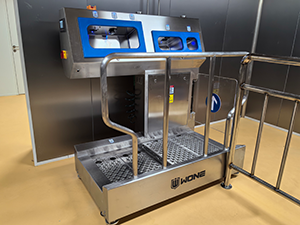
procedures, or forget entirely during a busy shift. A controlled entry system, such as an integrated personnel hygiene station with a turnstile or access door , removes this dependence on
human judgment.The system enforces the process: soap, water, drying, disinfection, and boot cleaning must be completed in order before the gate unlocks. This guarantees compliance,
not just hopes for it.
2. Creating an Auditable Trail
International standards increasingly require documented evidence that hygiene protocols are followed. A manual sink cannot prove that an employee actually washed for 20 seconds. But a
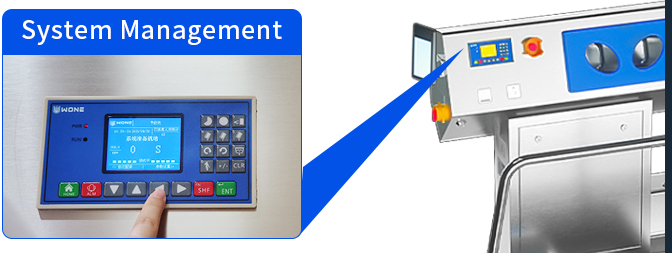
smart controlled entry system—equipped with an intelligent controller like i-clean—logs every transaction: who entered, what steps were completed, how long each took, and how much
disinfectant was used. This data is invaluable during audits. It transforms hygiene from a subjective observation into an objective, verifiable metric.
3. Controlling Cross-Contamination at the Source
Auditors focus on preventive controls. The entry point is the first opportunity to stop contaminants from entering the production environment. A controlled system ensures that dirty footwear
and unwashed hands are addressed before they reach the processing area. It integrates boot washing, which prevents soil from being tracked into the facility, and hand hygiene, which
prevents microbial transfer. This layered defense is precisely what international standards require.
4. Meeting the Expectations of Modern Standards
Updated standards like BRC Issue 9 and FSSC 22000 Version 6 place greater emphasis on hygiene monitoring and process control. They expect facilities to move beyond basic
compliance toward proactive risk management. A controlled personnel entry system is tangible evidence of this commitment. It shows auditors that the facility has invested in engineering
controls that make correct hygiene practices automatic and unavoidable.
Compliance Through Design
International audits are not just checking if you have soap and water. They are checking whether your hygiene system can consistently deliver the desired outcome—a clean,
uncontaminated workforce entering the production area. Controlled personnel entry systems achieve this by design, not by chance. They eliminate variability, provide evidence, and build a
defensible hygiene barrier. For any facility seeking or maintaining international certification, such systems are no longer optional; they are the expected standard.


